Industrial early warning · Existing production · No control-system disruption
See production losses
before they become expensive.
ClariFab continuously observes equipment, process conditions and product quality — revealing early signs of failure, drift and wasted capacity while there is still time to act.
Reduce downtime · Prevent scrap · Recover capacity · Free operator attention
International team · Stockholm office
The cost of finding out late
Most industrial losses begin before they become visible.
A machine may continue running while resistance increases. A process may remain inside its limits while quality drifts. A full shift may be scheduled while only a fraction of it creates product.
Traditional alarms report a limit that has already been crossed. ClariFab connects equipment behaviour, cycle timing and quality evidence to expose what is developing earlier.
What continuous production intelligence changes
Earlier evidence creates more options — and costs less than a late reaction.
Avoid unplanned downtime.
Detect changing machine behaviour before it develops into a disruptive failure.
EARLY EVIDENCELonger cycle phase · rising temperature · speed loss under load
Plan maintenance instead of recovering from a breakdown.Prevent avoidable scrap.
Catch process drift while it affects the first products — not after an entire batch.
EARLY EVIDENCEPressure timing · geometry shift · changing defect pattern
Correct the process before material and production time are lost.Recover hidden production time.
Separate productive operation from microstops, waiting, extended cycles and quality holds.
EARLY EVIDENCEObjective cycles · stop context · constraint timeline
Use capacity that is already installed and already paid for.Automate attention.
Let the system watch routine conditions continuously while people focus on exceptions.
EARLY EVIDENCEClear exception · affected product · required response
Reduce repetitive observation without removing human judgement.From weak signal to business outcome
The value is not another dashboard. It is what the operation can prevent, recover or redeploy.
What begins to changeIf it remains unseenWith earlier evidence
Motor temperature rises while conveyor speed falls under loadUnexpected stop, secondary damage and emergency repairInspect and maintain during a planned window
Feature position drifts across consecutive productsA batch reaches final inspection with the same defectCorrect settings after the first affected products
Microstops and extended cycles accumulate across the shiftOutput misses plan while the real constraint remains disputedPrioritise the largest recoverable source of lost time
An operator repeatedly watches and classifies a stable conditionSkilled attention is consumed by routine surveillanceEscalate only exceptions and redeploy attention to higher-value work
How ClariFab creates early warning
An independent decision layer around the production you already own.
We combine targeted sensing, machine vision and fit-for-purpose analytics to detect equipment degradation, process drift, quality risk and hidden capacity loss — without replacing the machine or destabilising its control system.
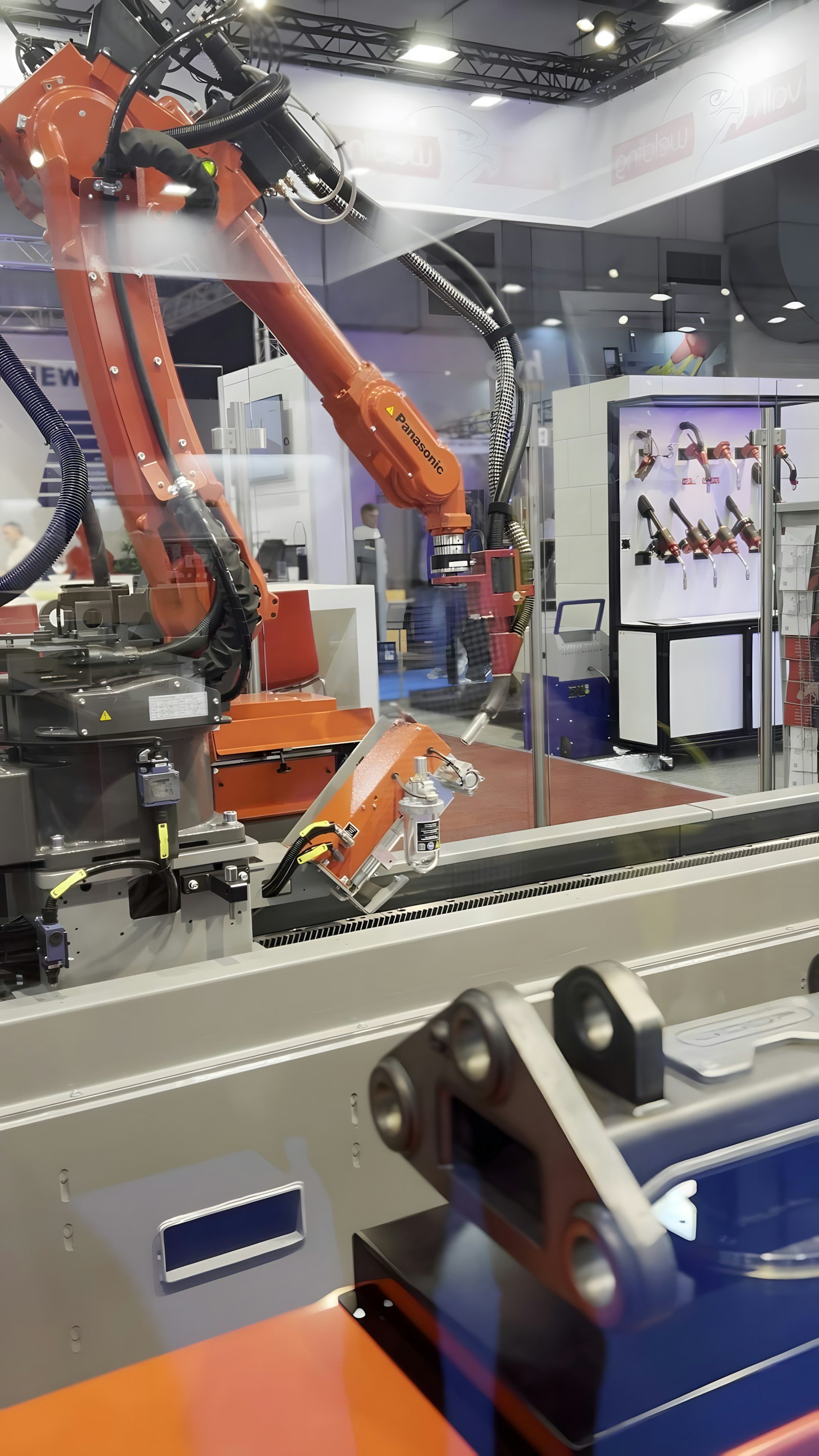
01 / INDEPENDENT SENSING LAYER
Instrument the process around the PLC.
We select and install only the signals required by the task — without depending on the machine builder or modifying control logic.
- Laser & optical sensors
- Motor & conveyor encoders
- Hall, pressure & temperature sensing
Explore independent sensing ↗
02 / MACHINE VISION
Observe the operations that numbers cannot explain.
Industrial cameras monitor critical process stages and product quality, preserving position, timing and visual context at production speed.
- Critical-process monitoring
- Presence & feature inspection
- Quality pattern detection
Explore machine vision systems ↗
03 / FIT-FOR-PURPOSE INFORMATION SYSTEM
Get the exact picture your operation needs.
Signals, production events, quality data and laboratory results become one tailored system — with no unused software package attached.
- Purpose-built OEE & KPIs
- Custom reports & dashboards
- Traceability & engineering analysis
Explore information systems ↗
How the overlay is built
Minimum necessary hardware.
Maximum useful context.
Start with the production problem
Define the decision, blind spot or manual process that creates a measurable operational cost.
Select only meaningful signals
Choose the sensors and vision points that explain the problem. No data collection without a purpose.
Create independent process context
Combine events, movement, conditions and quality results without becoming dependent on any PLC brand.
Deliver the exact outputs required
Build the alerts, OEE logic, dashboards and reports people will actually use — and nothing they will not.
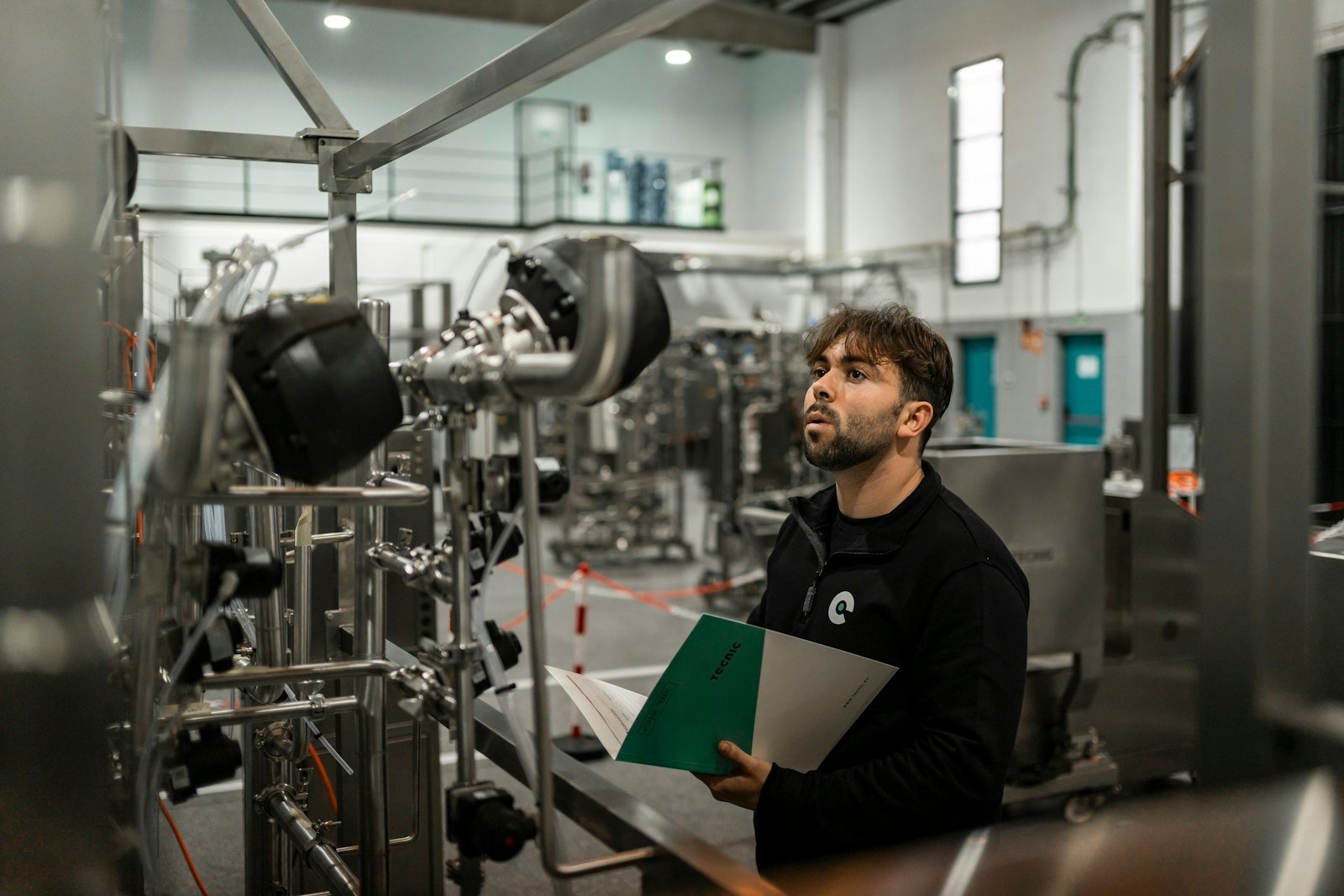
Engineering starts with the real process.
Selected project / Manufacturing Intelligence Platform
A modern information layer around an existing automated line.
Designed and delivered independently from the original machine controls: industrial sensors, Linux edge services, Python processing, PostgreSQL, laboratory integration and role-based web dashboards.
Control systemLeft operationally independent while the new information layer observed real production.
OEE & reportingBuilt around the actual workflow instead of a generic software package.
Production contextConnected sensors, material, laboratory quality and process events in one traceable picture.
SYSTEM ARCHITECTURE · SENSOR INTEGRATION · PYTHON · POSTGRESQL · OEE
Explore the project ↗
The ClariFab principle
Any line. Any PLC. Any age. Modern visibility without control-system intervention.
Automation Without Pain · Engineering essays
Five connected arguments for improving production without destabilising it.
Measurement is not neutral. Human factor is a systems problem. The PLC is not always the right place for new intelligence. This series explains the reasoning behind the ClariFab approach — from the production floor outward.
Explore the complete series →05Edge-first architecture
An Independent Manufacturing Information Layer Above Any PLC
The PLC should control the machine. An independent edge layer can observe, learn and explain without destabilising that protected core.
Read 9 min read ↗04Human factor
Fit-for-Purpose OEE: Why Generic Platforms Become Expensive
Human factor is usually a systems problem: delayed evidence, excessive interpretation and too many small decisions under time pressure.
Read 7 min read ↗03Signals, not data
Machine Vision for Critical Process and Quality Control
The goal is not to measure everything. It is to find the earliest signal that changes the next production decision.
Read 8 min read ↗Start with the problem
What is your production line trying to tell you?
Bring us a legacy line, a recurring quality issue, a production blind spot or an oversized software package that still does not provide the report you need.
ceo@clarifab.com
+46 700 931 035
Calls & WhatsApp