TRACK 1842WHITE ENCLOSUREColor confidence 99.2%
← All case studiesSee the product.
Solution concept / Vision-guided robotic sorting
See the product.
Choose the route. Pack it correctly.
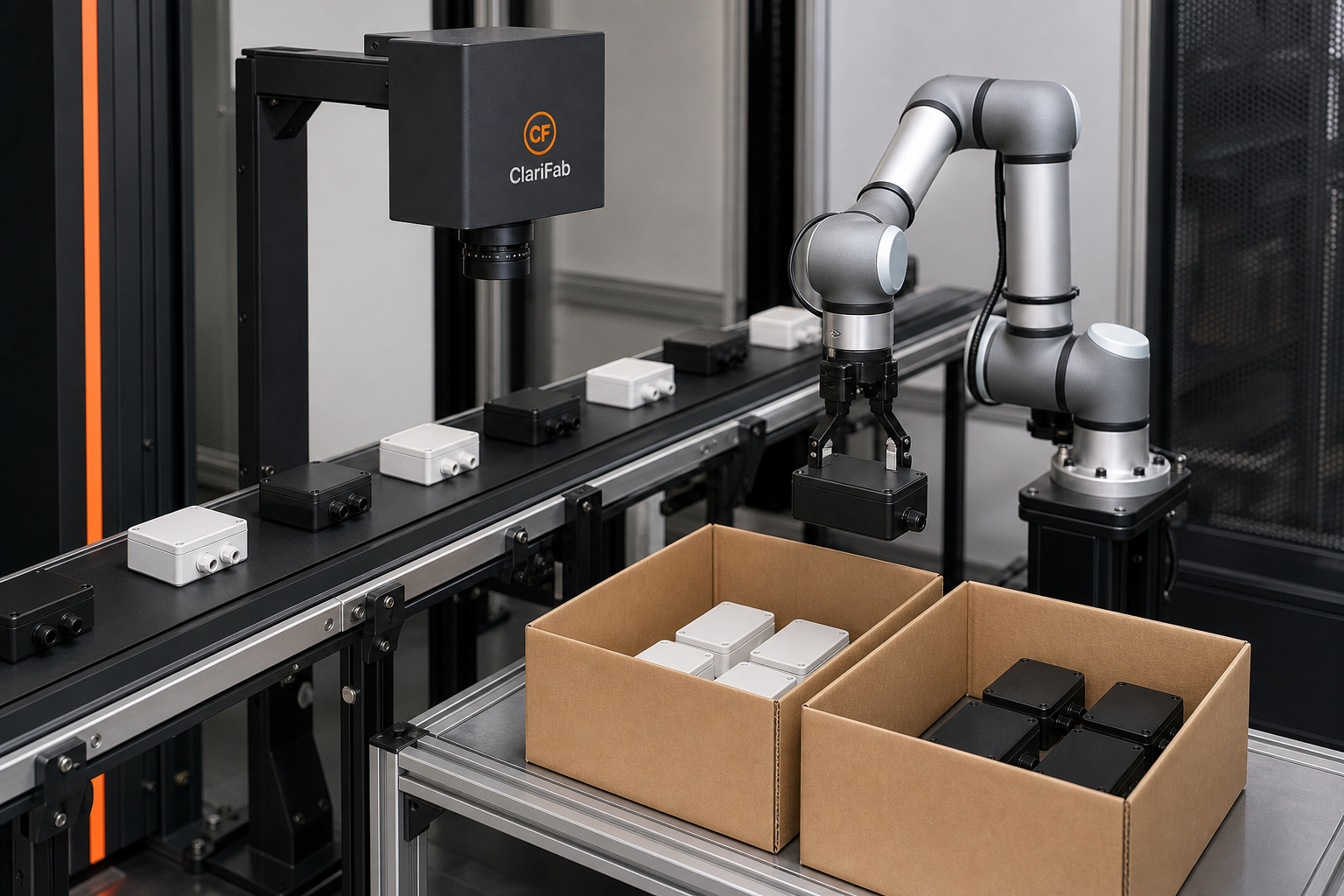
A compact camera and robotic handling cell identifies small white and black electrical enclosures on a conveyor, tracks each product and places it into the correct cardboard shipping carton.
See the decision logicThe production task
Two visually similar products shared one conveyor — but required different packing destinations.
Small electrical enclosures, approximately 5 × 10 × 5 cm, arrived in white and black versions with connectors and other visible features. The cell needed to identify each moving product, preserve its conveyor position and guide a manipulator to the correct carton without mixing the two variants.
The visual decision
Detection answers “where is it?” Color classification answers “where should it go?”
LIVE CLASSIFICATION · ILLUSTRATIVE FRAME2 PRODUCTS TRACKED
TRACK 1843BLACK ENCLOSUREColor confidence 98.7%
Product class and conveyor position remain connected until pick confirmation.NO COLOR MIXING
One coordinated cell
Optics, conveyor tracking and robotic handling operate as one sequence.
YOLOv8 detects the enclosure, checks the visible product type and creates a track ID.
Controlled lighting and calibrated color values separate white and black variants reliably.
Conveyor position determines when the product enters the robot pick window.
The manipulator receives class and position, then places the product in the assigned carton.
Successful pick, destination and carton count are recorded for packing control.
More than left or right
The same cell can protect the packing result.
Once every product has a class and track ID, the system can verify the full handling sequence instead of issuing a momentary color signal.
PACKING CELL · LIVENORMAL
LAST PICKTrack 1841 confirmedDESTINATIONRight cartonNEXT ACTIONContinue packing
A product class that does not match the active destination creates a clear exception.
The cell knows when a carton reaches its defined quantity and requires replacement.
Unsuccessful or uncertain handling can be stopped from becoming an untraceable packing error.
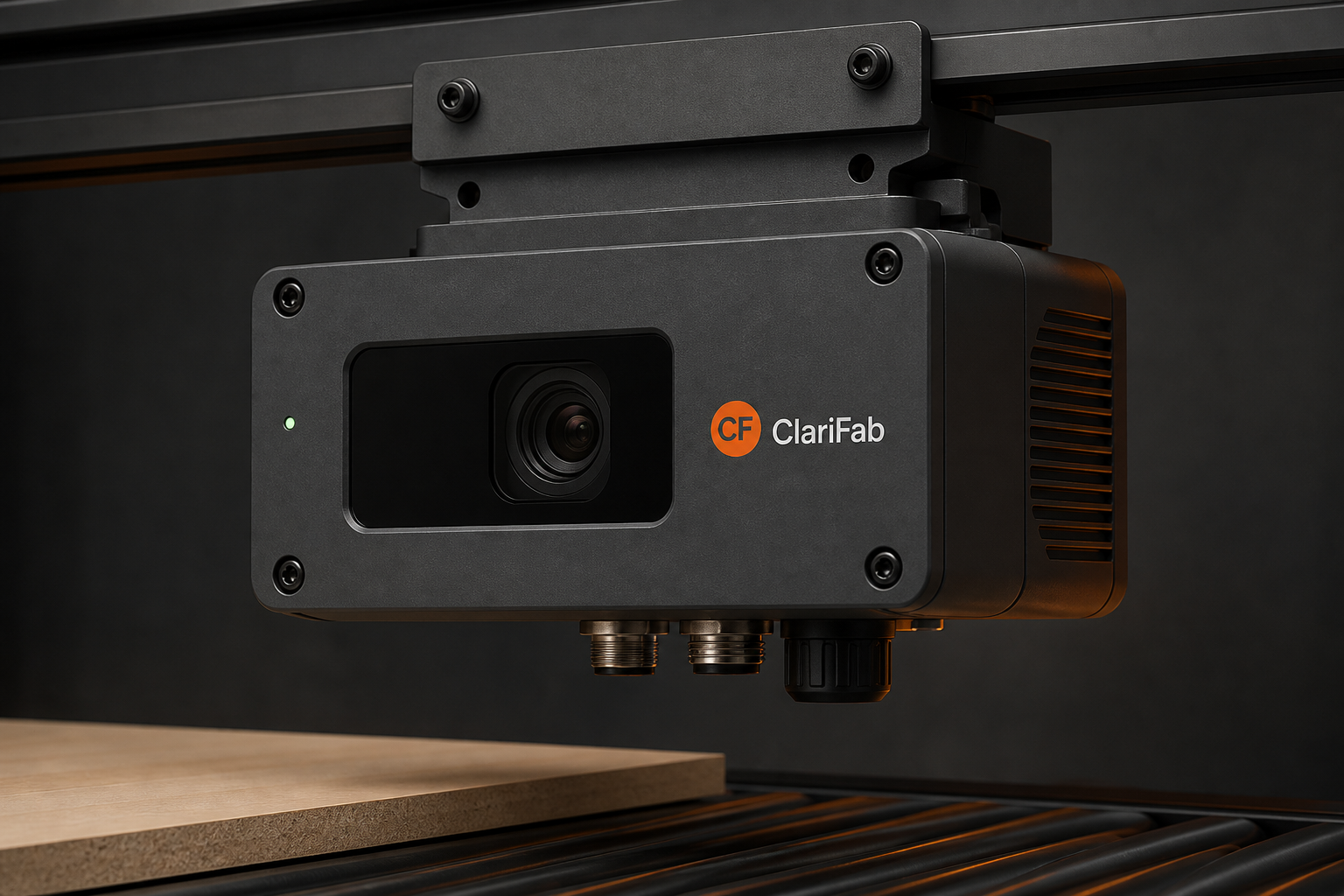 EDGE VISION MODULE
Local vision intelligence
The same compact device can own the visual decision.
A Raspberry Pi 5 and Camera Module 3 capture and process the conveyor scene locally. A trained YOLOv8 model identifies the enclosure and its position; calibrated color analysis assigns the white or black route.
Business value
A repetitive sorting task becomes a controlled packing process.
Fewer mixed-product cartons
Every pick is tied to a detected product class and an explicit packing destination.
Less repetitive manual handling
Color sorting, transferring and counting can run continuously without assigning an operator to every product.
Consistent pack quantities
Destination counts support carton completion, replacement and downstream labelling workflows.
Reusable automation cell
New enclosure types or routing rules can be introduced through vision logic and recipes instead of rebuilding the conveyor.
Independent automation layer
The conveyor transports. Vision decides. The robot handles.
The cell separates responsibilities cleanly: optics create a stable image, edge processing identifies and classifies the product, conveyor context preserves position, and the robot executes a defined pick-and-place route.
MACHINE VISION · COLOR CLASSIFICATION · OBJECT DETECTION · CONVEYOR TRACKING · ROBOT GUIDANCE · PACKING CONTROL
Concept note
This page describes a technically realistic solution concept rather than a claimed delivered customer project. Product geometry, cell dimensions, confidence values and carton counts are illustrative and would be validated during a real pilot.
Start with two product routes
Which repetitive sorting decision should your line make automatically?
ClariFab can define the optics, classification rules, tracking signals and robot interface for a focused sorting-and-packing pilot.
Discuss a sorting cell