← All case studiesWas every part
Case study / Machine vision in wood processing
Was every part
drilled correctly?
A conveyor vision station identified the completed drilling pattern on wooden components and classified each part before it continued through production.
See the inspection logic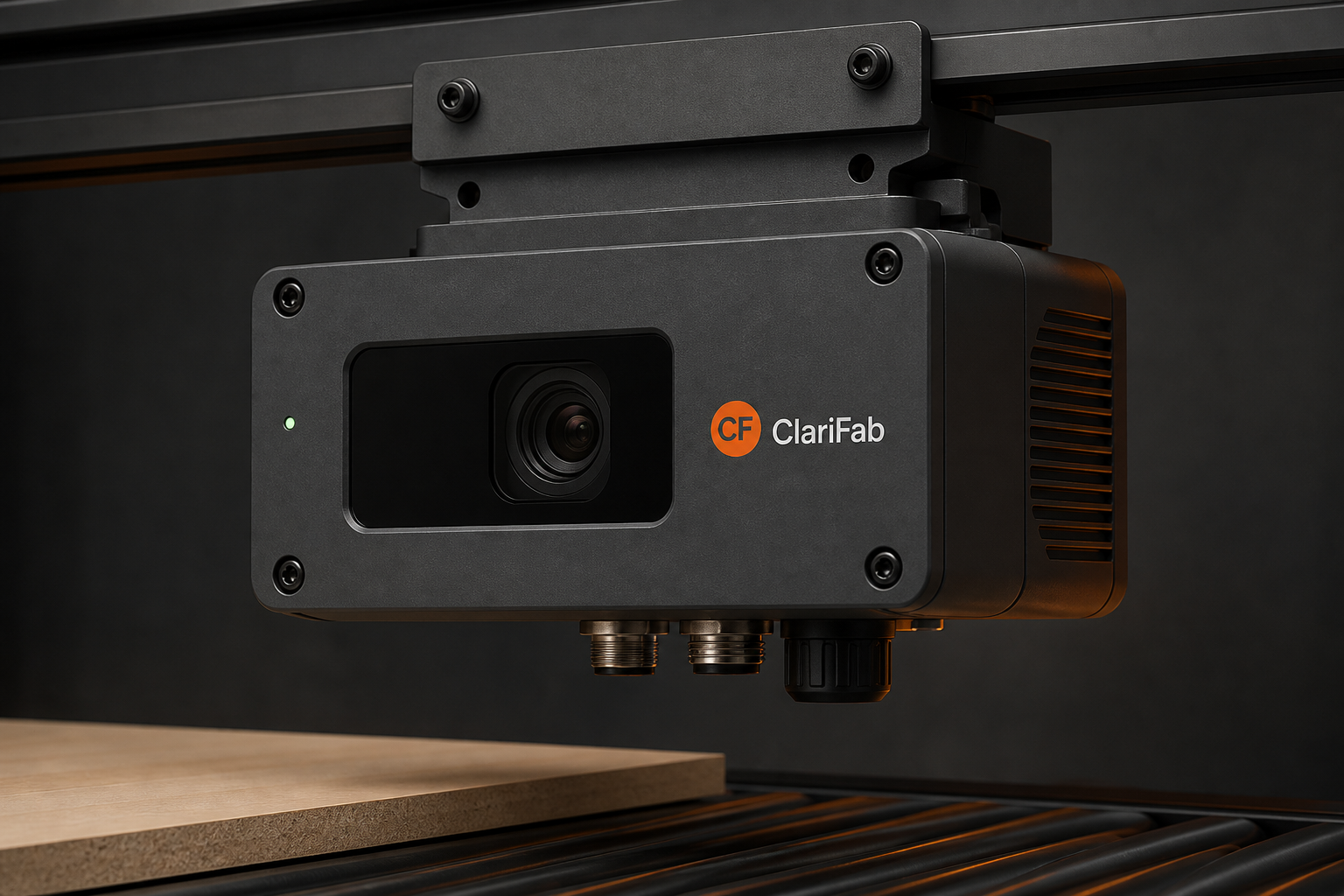
CLARIFAB EDGE VISION DEVICELOCAL IMAGE INFERENCE
CaptureYOLOv8 inferenceRouting decision
Production problem
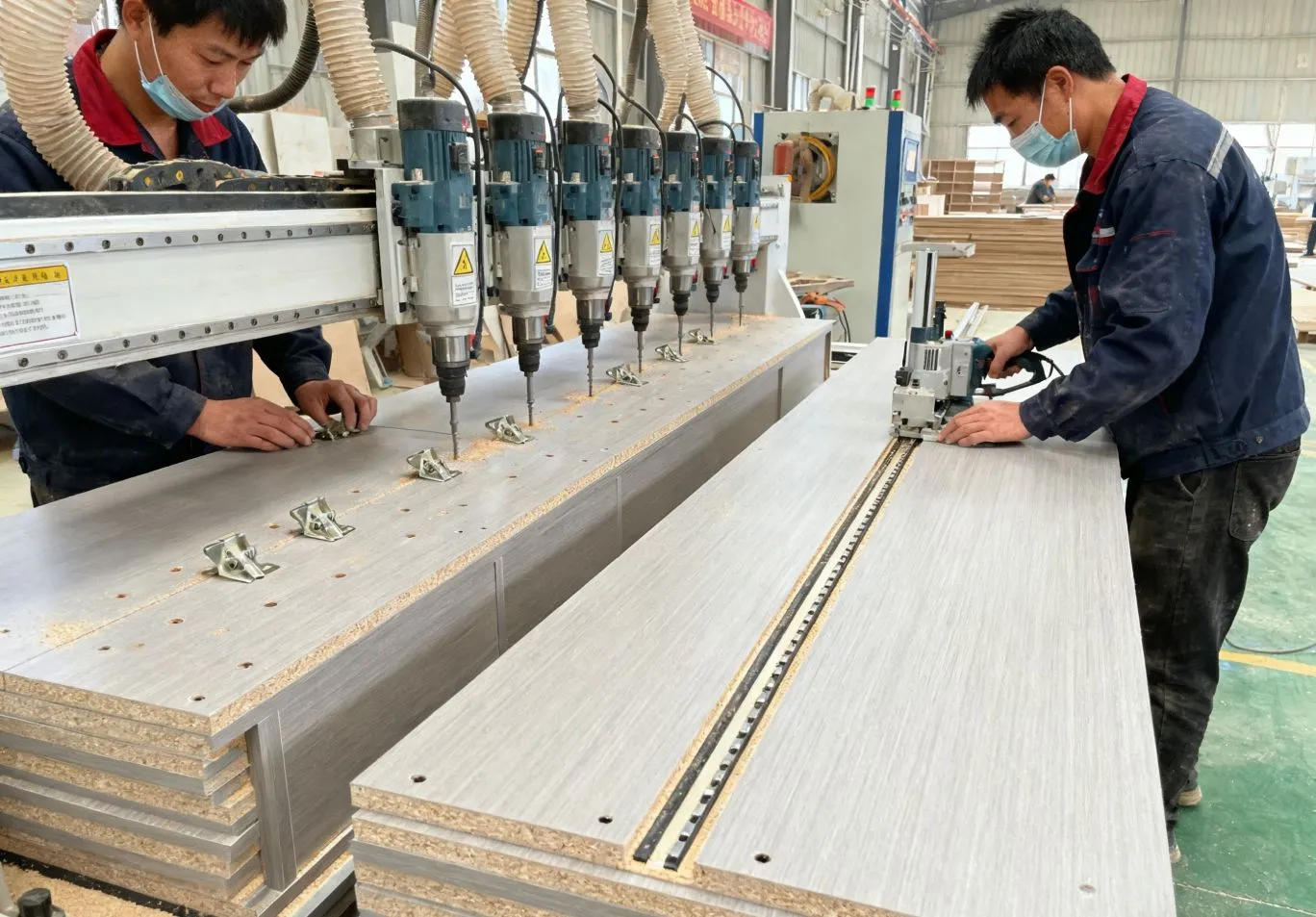
A completed drilling operation needed to be verified at conveyor speed.
The presence of a part did not prove that its hole pattern was correct. A component could contain the expected number of holes and still be unsuitable because one feature was missing, additional or displaced. Manual inspection introduced delay and made consistent sorting difficult.
The visual decision
Count alone was not enough. Every feature needed position and tolerance context.
Δ POSITION
Same hole count.Different manufacturing result.
Inspection at production speed
From a moving component to a routing decision.
Detect the part and bind the image to its conveyor position.
Normalise orientation and separate features from natural wood texture.
Check detected holes against the required pattern and tolerance regions.
Issue a clear accept, rework or reject result with image evidence.
CONCEPTUAL DEVICE VISUALISATIONThe edge vision device
Inspection was processed locally, next to the production line.
The compact ClariFab device combined image capture and inference in one line-side enclosure. It did not need to send every production image to a remote cloud service before making a sorting decision.
LOCAL OUTPUTPart ID · detected features · confidence · classification · image evidence
Business value
The system protected downstream value — not only the drilling operation.
Earlier defect containment
Incorrectly processed parts could be separated immediately instead of consuming more machine time, labour and material in later operations.
Consistent sorting logic
Every component was evaluated against the same pattern and position rules, reducing dependence on subjective manual judgement.
Production-speed inspection
Quality verification happened on the conveyor without creating a separate inspection queue or slowing the normal material flow.
Traceable quality evidence
Images and results preserved what was detected, where the deviation occurred and how the routing decision was made.
Independent vision layer
The machine performed the drilling. The vision system verified the result.
The inspection layer observed completed parts without replacing the drilling controls. Camera, lighting, product trigger and conveyor context produced a deterministic quality result that could support sorting and engineering analysis.
MACHINE VISION · FEATURE DETECTION · CONVEYOR TRACKING · TOLERANCE CONTROL · AUTOMATIC SORTING
Project note
This case is intentionally anonymised. The inspection principle and operational value are preserved; customer identity, part geometry, production rate and sensitive tolerance values are not disclosed. Reference photography: Merton A/S and V-Trust.
Start with one visible defect
Which operation still depends on someone looking at every part?
ClariFab can define the imaging conditions, inspection logic and minimum useful routing output for a production-speed pilot.
Discuss a machine vision pilot