The lowest purchase price does not define the lowest-risk route to production.
A second-hand line arrives with valuable mechanics, robots and process knowledge already embodied in it. It also arrives with unknowns: incomplete backups, site-specific interfaces, ageing components, undocumented changes and an operating history the buyer cannot see.
The decision is therefore not simply whether to “automate” it. It is what the business needs to own now: production capacity, control logic, or operational evidence.
Reference asset
A capable 2020 robotic boxing and packaging line.
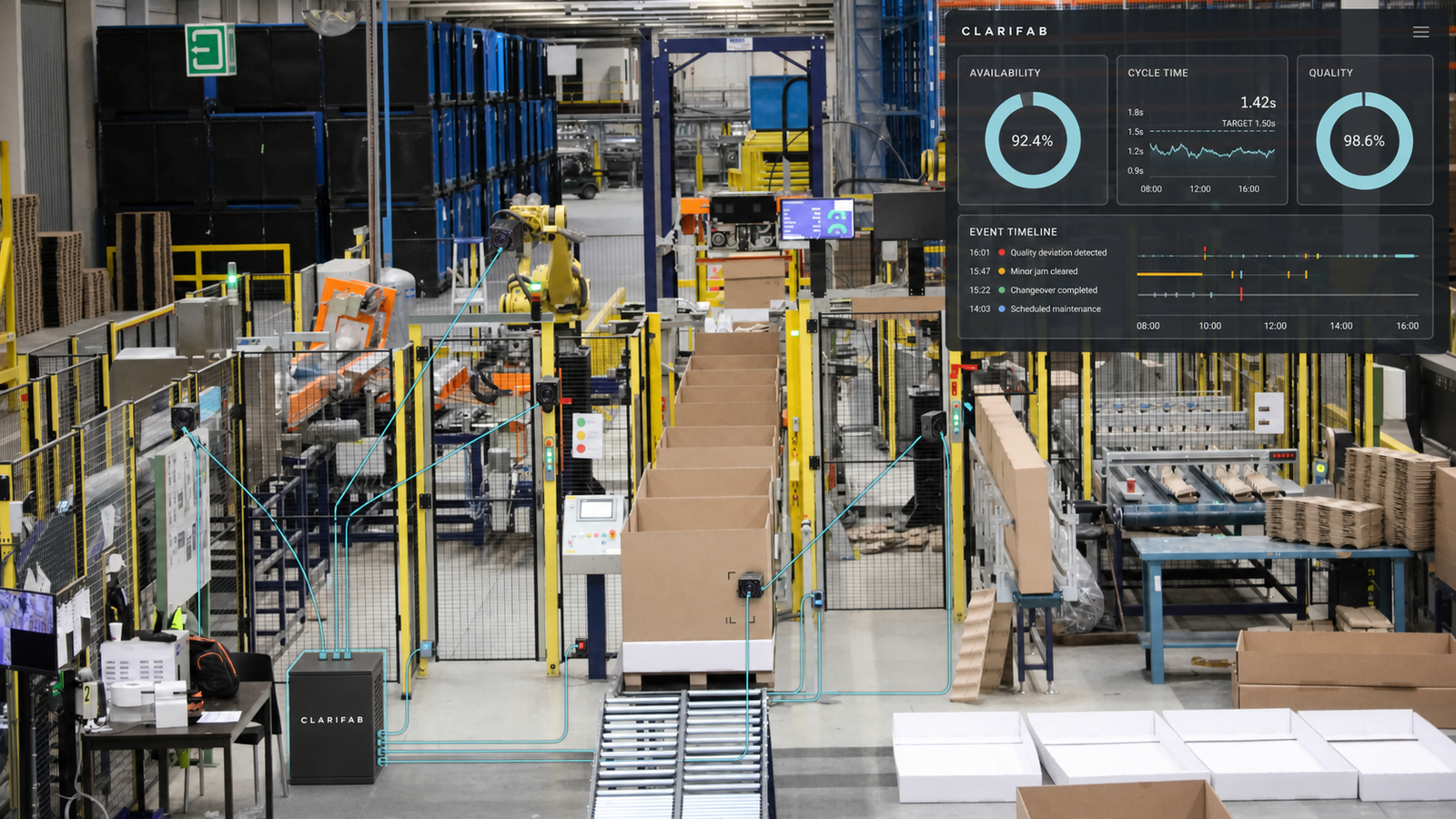
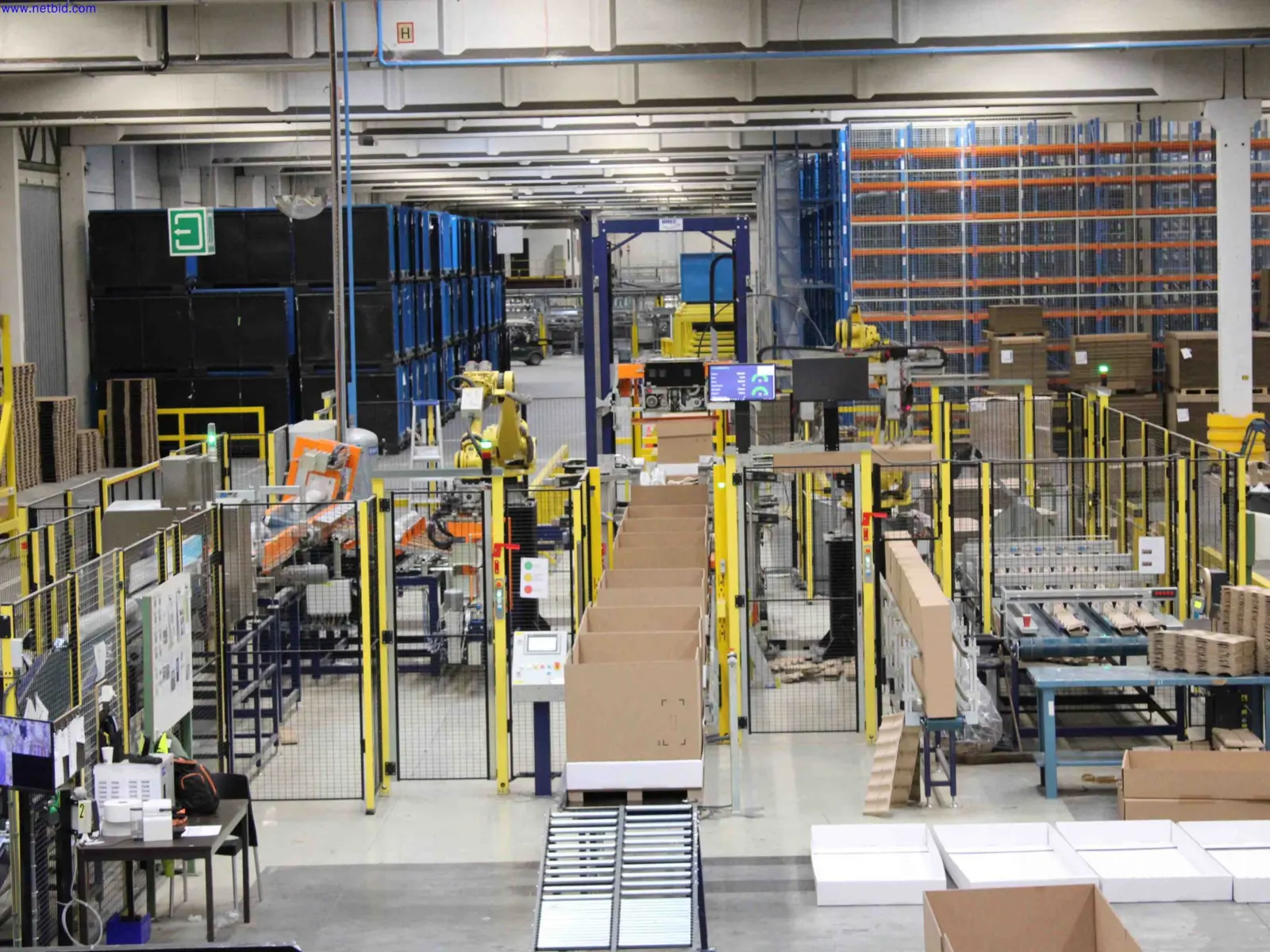
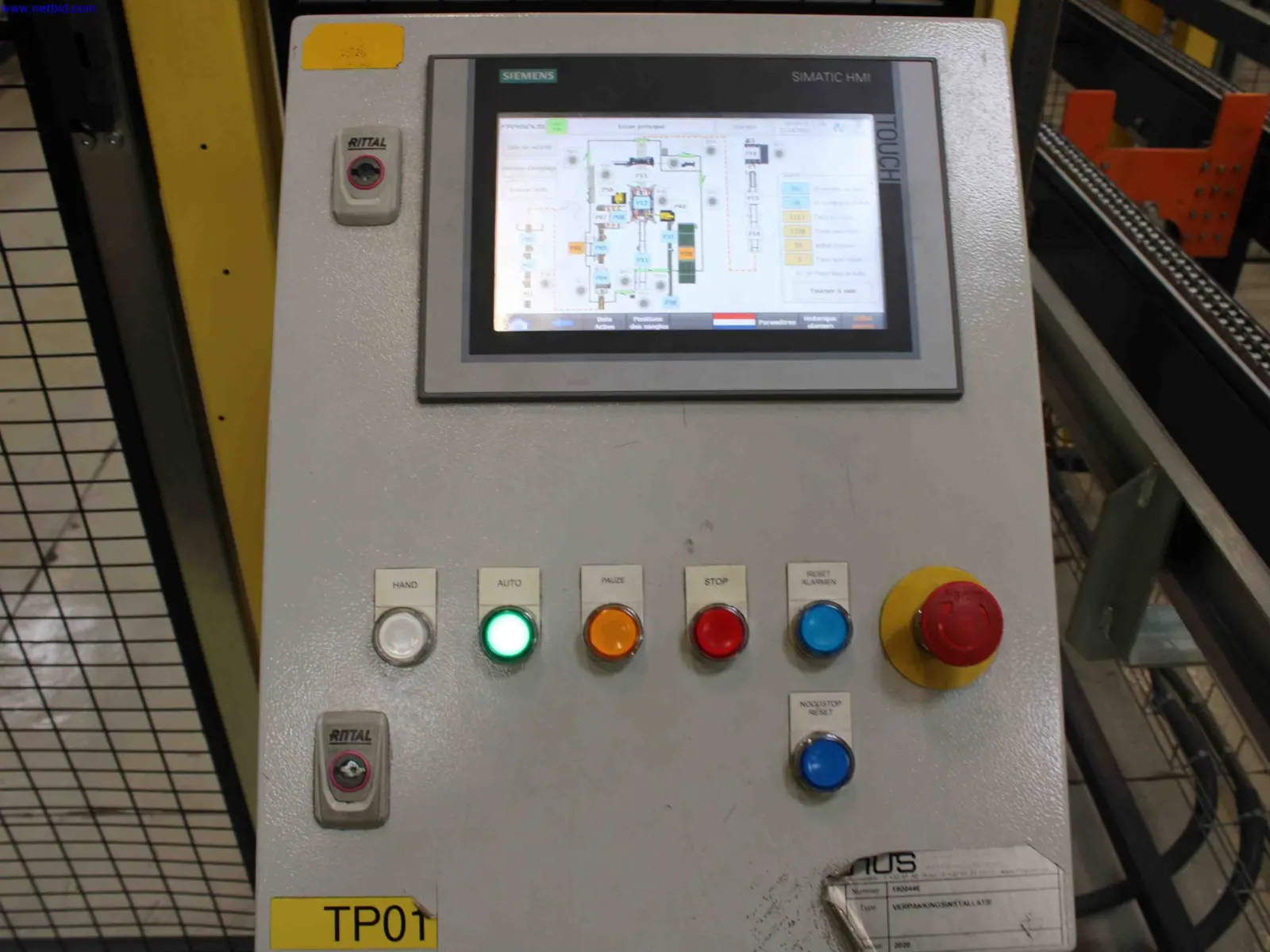
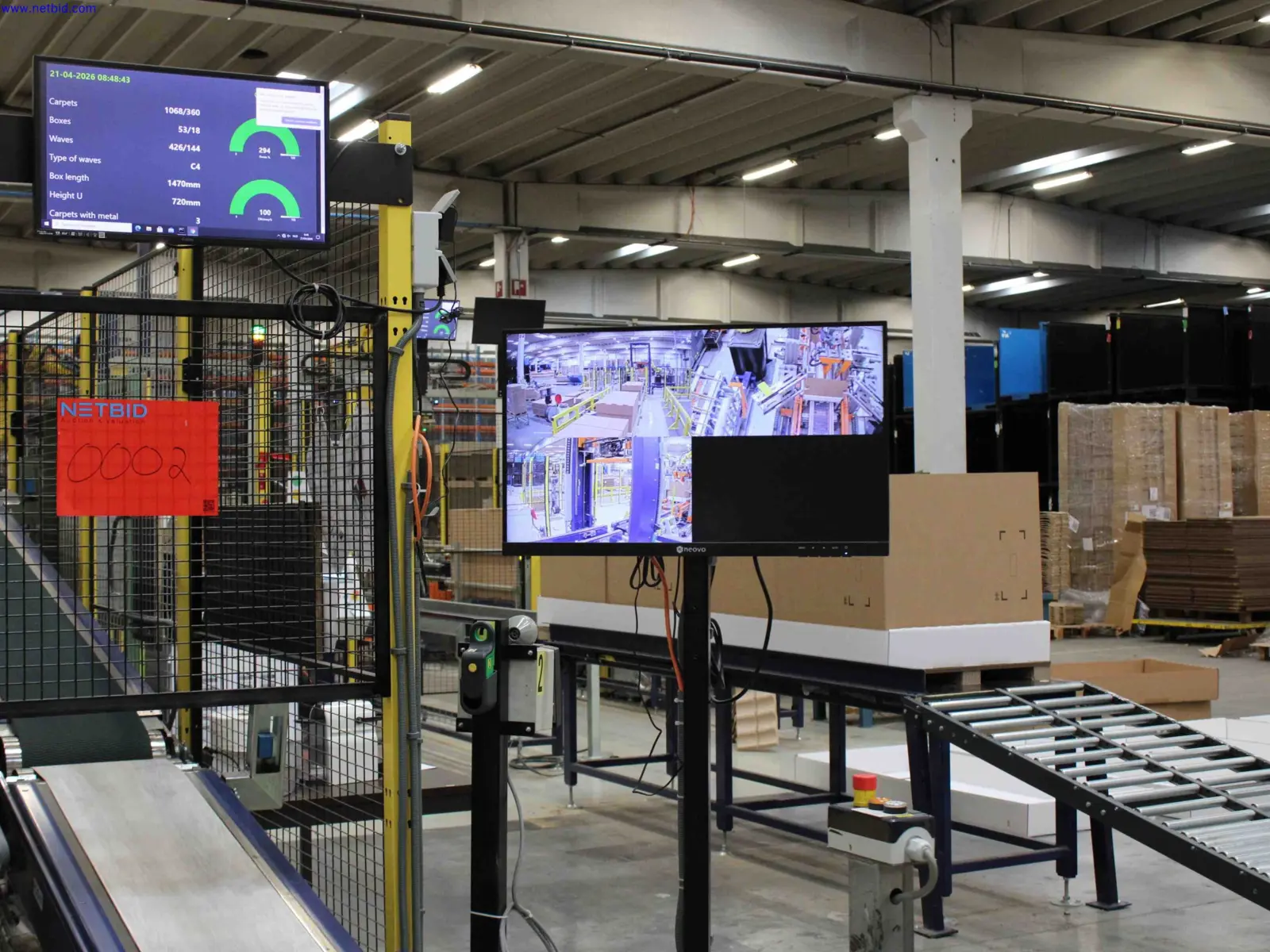
The public auction listing describes a complete cell with two FANUC R-2000iC robots and R-30iB controllers, driven conveyors, packing stations, weighing, strapping, banding, labelling, cameras, guarding and an integrated HMI.
Complete line overviewExisting control and HMIExisting operational interfaces
Source photography and listed configuration: NetBid auction listing #19369-2 ↗. The listing does not verify software backups, electrical documentation, component condition, safety validation or suitability for a new product and site.
Three routes to operation
Each route buys a different kind of certainty.
01 / RECOMMISSION
Run the line substantially as it is.
Reassemble, inspect, restore backups and utilities, validate safety, repair what is necessary and prove the original production sequence.
Fastest path if the line is complete and healthy
Preserves the original engineering
Lowest initial intervention
BUYS CAPACITY FIRST02 / RE-AUTOMATE
Replace the control architecture.
Recover the functional specification, engineer new PLC, safety, I/O, HMI and data interfaces, then recommission the line as a new automation project.
Maximum ownership and sequence flexibility
Removes unsupported control dependencies
Largest validation and commissioning scope
BUYS CONTROL OWNERSHIP03 / INSTRUMENT
Add intelligence around the working controls.
Keep the PLC and safety system operationally independent. Observe the physical process with new sensors, cameras and edge services, then create OEE, traceability and engineering context.
Minimal intervention in machine logic
Fast evidence without a generic software suite
Does not pretend to repair an unsafe or broken base machine
BUYS OPERATIONAL EVIDENCE
Planning comparison
Compare total intervention — not only hardware cost.
Ranges are directional planning assumptions for a line of this complexity, excluding purchase, transport, building works and major mechanical repair. A technical audit must precede any quotation.
Decision factor
Recommission as-is
Full re-automation
ClariFab independent layer
Relative engineering CAPEX
1.0× baselineCan rise sharply with hidden faults
4–8×New control, safety, HMI and validation
1.5–3×Only task-relevant sensing and software
Indicative lead time
2–8 weeks
4–9 months
4–12 weeks
Electrical / logic intervention
Low to medium
Very high
Low; galvanically isolated where required
Safety validation scope
Existing system must be revalidated
Complete redesign and validation
Existing system remains responsible; additions assessed separately
Speed to first product
Fastest when documentation and backups exist
Slowest
Fast after a safe base line runs
Control ownership
Limited by inherited architecture
Full
Unchanged; data layer owned independently
OEE, traceability and root cause
Only what already exists
Can be designed in, at additional scope
Purpose-built from the start
Recipe / sequence flexibility
Low to medium
Highest
Does not alter machine sequence
Commissioning risk
Hidden-condition risk
High integration risk
Low disruption; depends on a functioning base line
Best fit
Urgent capacity; same or similar product
Unsupported controls or materially new process
Working line with missing visibility and evidence
Principal limitation
Technical debt remains unknown
Cost, time and prolonged production delay
Cannot compensate for unsafe machinery or failed controls
The independent route
Observe the process around the PLC.
Non-contact sensors, encoder pickups, current and vibration signals, industrial cameras and edge services create a timestamped production model without becoming part of the machine’s control loop.
EXISTING LINEPLC · Robots · Safety · DrivesControls the machineOPERATES INDEPENDENTLYCLARIFAB EDGESensors · Vision · Linux · PythonObserves and contextualisesDELIVERS EVIDENCEOPERATIONSOEE · Events · Quality · TraceabilitySupports decisions
The stronger recommendation
Do not automate the unknown. Modernise in evidence-led stages.
STAGE 0
Audit
Inventory hardware, backups, networks, safety, documentation and intended product fit before committing to an architecture.
STAGE 1
Prove
Recommission a safe baseline and demonstrate mechanical capability with representative material.
STAGE 2
Measure
Add the independent layer to expose true cycles, constraints, stops, quality and maintenance evidence.
STAGE 3
Change selectively
Replace only unsupported or value-limiting control elements whose business case is demonstrated by real data.
For many used lines, the best strategy is not one of the three extremes. It is a controlled sequence: preserve embodied value, establish safe production, make operation observable, and spend major automation capital only where evidence justifies it.
Decision rules
When full re-automation is the right answer.
The legacy PLC, robot or safety platform cannot be supported or validated.
The new product requires material changes to motion, recipes or interlocks.
Backups and functional documentation cannot be recovered with acceptable risk.
The buyer requires long-term ownership of control software and spare-parts strategy.
When the independent layer is the right first investment.
The base machine can operate safely and its core sequence is useful.
The real constraint is missing OEE, diagnostics, traceability or quality context.
Production cannot accept a long controls-replacement shutdown.
The team wants facts before committing to a larger modernisation programme.
Study status. This is an engineering solution concept based on public listing information and the supplied modernization brief, not a record of a completed delivery for this asset. All costs and schedules remain subject to inspection, documentation recovery, risk assessment and site requirements.
Before you replace the controls
Find out what the used line can already do — and what the business actually needs.
ClariFab can structure the technical audit, measurement plan and staged modernization decision.